
Welcome
EU Foreign Affairs Council in Luxembourg: Focus on Ukraine, the Middle East and the Sudan
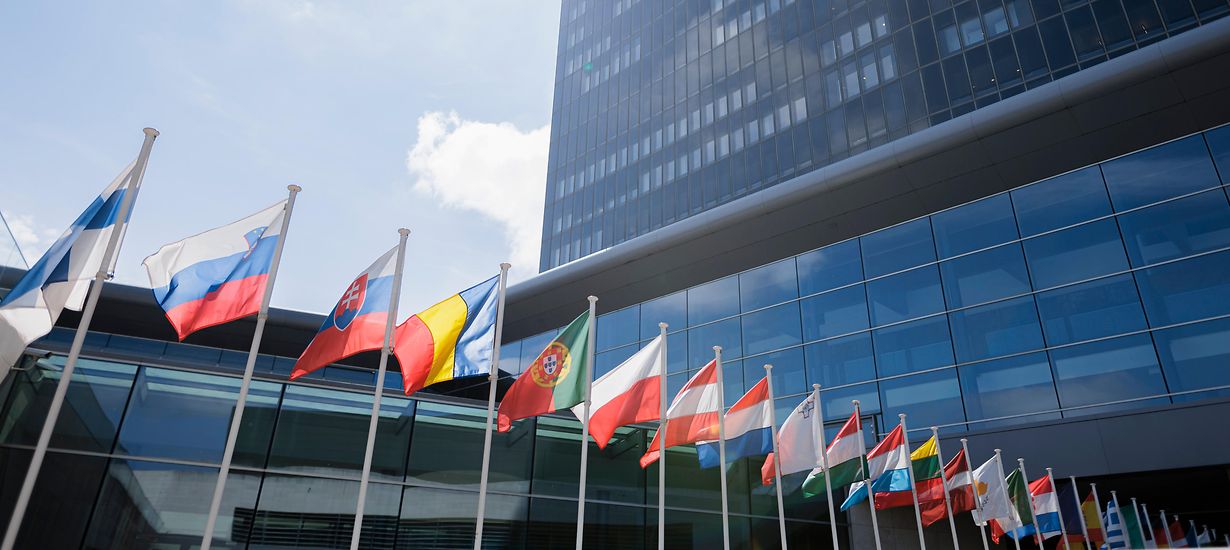
EU Foreign Affairs Council in Luxembourg © Felix Zahn/photothek.net
Foreign Minister Wadephul is travelling to Luxembourg today for the Foreign Affairs Council (FAC). Discussions will focus on the Russian war of aggression against Ukraine, the situation in the Middle East, the developments in the Southern Caucasus and the situation in the Sudan.
Russia’s war of aggression against Ukraine: Deadlock must be overcome
Ukraine has been defending itself against Russian aggression for more than four years now. In view of the ongoing tense situation, it remains the key task of the European Union to resolutely maintain and further extend its support. Support for Ukraine is therefore also at the top of the agenda in Luxembourg today. At the start of the Foreign Affairs Council, Ukrainian Foreign Minister Andrii Sybiha will join the discussions via video link to report on the current situation.
One priority of today’s meeting is to overcome the current deadlock. The results of the elections in Budapest last week are an opportunity to now make progress on implementing the support pledged for Ukraine as soon as possible, as a united EU with a common objective. This includes in particular the implementation of the 90 billion euro loan, the adoption of the 20th sanctions package against Russia and progress on EU accession negotiations with Ukraine. Even though no formal decisions on this will be made today, Germany is working to ensure that it can happen as soon as possible, and not only after a change of government in Budapest.
Moreover, the German-Ukrainian intergovernmental consultations last week underscored once again the scale of the support Ukraine requires. Alongside European instruments such as the Ukraine Support Loan, bilateral support from the member states therefore remains crucial, particularly in the sphere of military assistance. Germany will, not least, make available further Patriot systems for Ukraine and is urging its partners to provide additional contributions, also within the context of the air defence initiative.
At the same time, we must keep up the pressure on Russia. The 20th sanctions package should now be adopted as quickly as possible. It is also important to ensure that Russia does not reap economic benefits from ongoing conflicts in other regions, particularly in the Middle East.
The situation in the Middle East: Restoring stability
Intensive discussions will also be held at today’s Foreign Affairs Council on the situation in the Middle East and the Gulf region. As well as the war in Iran, they will centre on economic relations with Syria, and the situation in the Palestinian territories and in Lebanon.
With regard to Iran, Germany continues to advocate a negotiated solution. For the conflict has serious ramifications for the whole world, not least due to the crucial importance of the Strait of Hormuz for international trade, global energy supply and humanitarian supply chains. The United States has put forward an offer of dialogue, and third countries are working intensively to set up a second round of talks. Together, we as Europeans urgently press Iran to accept this offer. We call upon Iran to restore free and safe shipping routes through the Strait of Hormuz immediately. Close consultation with the Gulf states, which also border this waterway, is vital on this issue.
With Syria we want to drive forward EU measures to facilitate trade and investment. For economic recovery is a prerequisite for a successful transition process leading to a stable and secure Syria.
Germany has a clear stance with regard to Israel and the Palestinian territories. We clearly oppose the construction of Israeli settlements in the West Bank. It stands in the way of a two-state solution and represents a step towards the de facto annexation of the West Bank. At the same time and for this very reason, it remains important for us to maintain dialogue with Israel and find ways to put efforts to achieve a two-state solution back onto the agenda.
In Lebanon, the ceasefire and the first direct talks between Lebanon and Israel in decades give cause for hope. Germany and Europe encourage both sides to continue along the path of diplomacy to reach viable agreements to protect civilians on both sides. At today’s Foreign Affairs Council, Foreign Minister Wadephul will also meet Lebanon’s Prime Minister Nawaf Salam to discuss the situation in the country and the region.
The Sudan: Focus on humanitarian assistance and political process
Three years after the outbreak of civil war, the humanitarian situation in the Sudan remains dramatic. Today, the EU Foreign Affairs Council will follow on from the international Sudan conference, which took place in Berlin on 15 April and which succeeded in mobilising more than 1.5 billion euro in humanitarian assistance. Half of the pledges came from the EU and its member states. Germany alone is earmarking 232 million euro in humanitarian assistance for the Sudan and affected neighbouring countries.
Today, Germany will report to the EU Foreign Ministers on the outcome of the conference. The goal is to further dovetail international support and achieve tangible progress for the people.
Another priority is to protect critical infrastructure in the Sudan. Germany is calling for the relevant agreements that were negotiated through mediation efforts by EU Special Representative Annette Weber to be signed swiftly. They are to form the basis for agreements between the EU and the parties to the conflict and will play an important role in protecting the civilian population.