
Welcome
Milestone in the EU accession process for Ukraine and Moldova: Foreign Affairs Council in Luxembourg
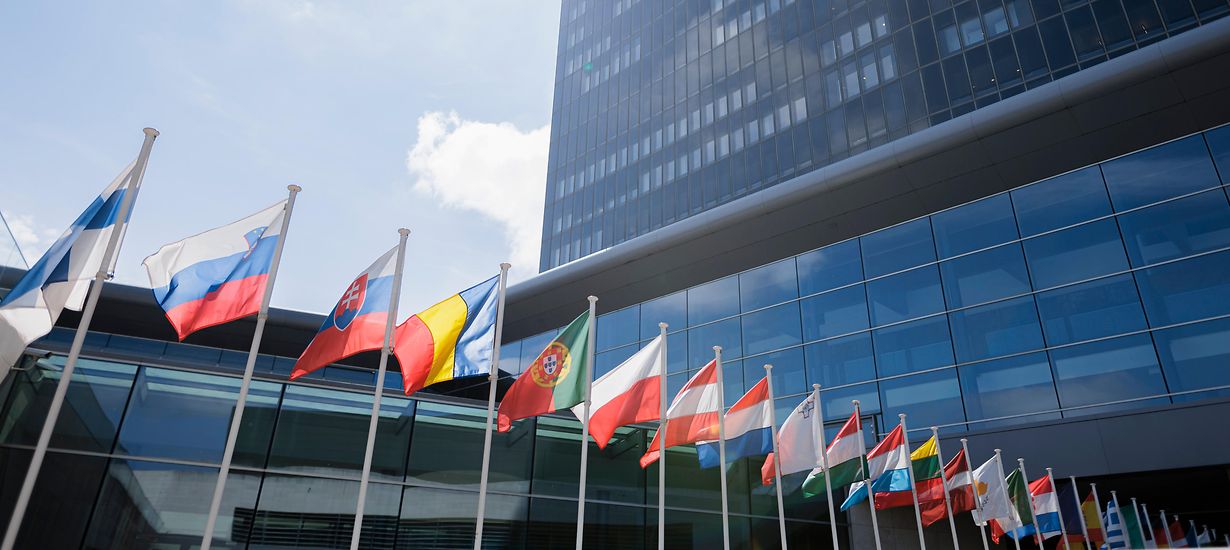
EU Foreign Affairs Council in Luxembourg © Felix Zahn/photothek.net
Foreign Minister Wadephul is travelling to Luxembourg today for a meeting of EU foreign ministers (the Foreign Affairs Council). The talks will focus on the Russian war of aggression against Ukraine, the situation in the Middle East and relations with China. Read on to find out more.
At today’s meeting of EU foreign ministers, the member states will together take a major step for Europe’s security and future: the first negotiating chapters with Ukraine and Moldova can be opened. Beyond this, Germany supports the rapid continuation of the accession process, including the opening of all other chapters. So that we can move forward successfully, it is important that the candidate states continue consistently with their reforms. We want to continue to support Ukraine on its way into the European family.
At their meeting in Luxembourg, the EU foreign ministers will also discuss possible negotiations with Moscow. In this context, Germany is pressing for clear principles: an immediate ceasefire, negotiations on the basis of the current contact line, reliable and legally binding security guarantees for Ukraine, the use of frozen Russian assets for compensation, and attention to European and transatlantic security interests. The most important precondition for successful negotiations continues to be that Russia shows a serious interest in a diplomatic solution.
As long as Moscow does not move in this direction, Germany will seek to further step up the pressure on Russia. This would include, among other things, an ambitious 21st sanctions package.
The situation in the Middle East
Another focal point of the discussions in Luxembourg will be the situation in the Middle East, particularly with reference to Iran, the Strait of Hormuz and Lebanon.
Germany is lobbying for the EU to take a coordinated approach on Iran. In this context, freedom of navigation in the Strait of Hormuz remains of crucial importance.
With regard to Israel and the Palestinian territories, we share the extreme concern about the humanitarian situation in the Gaza Strip and about developments in the West Bank.
Strategically shaping EU-China relations
The ministers will also be discussing relations with China – security challenges, in particular China’s support for Russia, as well as geoeconomic issues.
Germany advocates a united European approach. There are increasing indications that China has stepped up its support for the Russian war of aggression. Against this background, we must consistently defend European interests and carefully consider possible measures.
At the same time, the German Government is calling for the resolute use of trade protection instruments. The aim is to reduce existing dependencies – for instance on critical raw materials – and to strengthen Europe’s ability to act. Germany will actively help shape the further development of the relevant instruments.
EU reforms and enlargement
On the fringe of the Council meeting, Foreign Minister Wadephul will also be talking to his counterparts from France, Belgium, Luxembourg and the Netherlands about reforms to the European Union and the enlargement process.
Germany advocates for a European Union that is capable of action and ready for enlargement. Foreign Minister Wadephul advocated for this in his speech at the 13th Adenauer Conference in May 2026.
Strengthening the partnership with Armenia
On the fringes of the Council, Foreign Minister Wadephul will have an informal breakfast with Armenian Foreign Minister Ararat Mirzoyan. Germany is committed to the further deepening both of relations between the European Union and Armenia and of bilateral relations. At the same time, the German Government supports the peace process between Armenia and Azerbaijan and calls for its rapid conclusion with the signing and ratification of an agreement. The normalisation of Armenia’s relations with Azerbaijan and Turkey is also to be further supported.